Web3 & Blockchain: Hype vs Reality.
In the last ten years, Web3 and blockchain have caused a lot of excitement and confusion. Web3 is said to be the future of the internet. It promises decentralization, user ownership, transparency, and a whole new way of interacting online. The ecosystem has grown quickly, from cryptocurrencies to NFTs and decentralized apps (dApps). But the truth is more complicated than the hype.
In this blog, we'll talk about what Web3 and blockchain really are, what they promise, where they deliver, and where they don't.
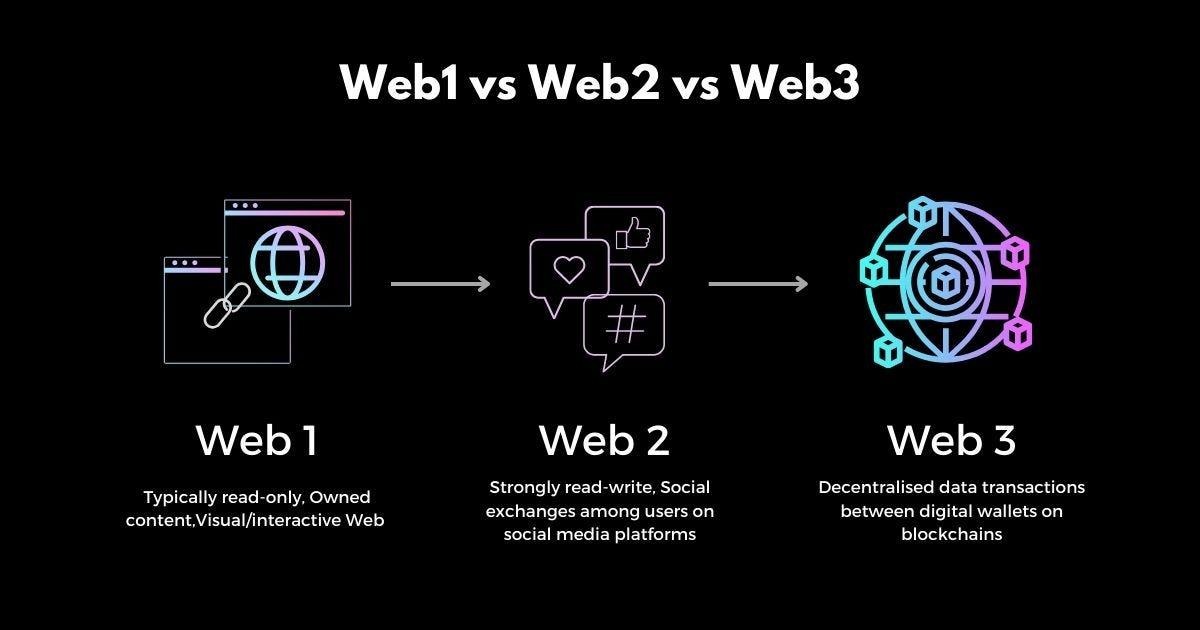
What does Web3 mean?
Web3 is the next step in the internet's development. It will move from centralized platforms like Google, Facebook, and Amazon to decentralized systems that use blockchain technology.
Web1 (1990s to early 2000s): An internet that only lets you read
Web2 (now): The internet lets you read and write (social media, user-generated content)
Web3 (new): An internet where you can read, write, and own things
People should own their data, identity, and digital assets in Web3 instead of relying on big companies.
Getting to Know Blockchain
Blockchain is the heart of Web3. It is a digital ledger that is spread out over many computers and keeps track of transactions.
Key features include:
Decentralization, as there is no single authority in control of the system.
Transparency, as all transactions are visible.
Immutability, as information cannot be easily modified after being input.
Security, through cryptographic techniques for protecting data.
Some popular blockchain technologies include:
Bitcoin, for virtual currency.
Ethereum, for smart contracts.
The Hype: What Web3 Says It Will Do.
Real Ownership of Data
Web3's goal is to let people have control over their own data. You own and control your information instead of platforms making money off of it.
Decentralization
Without a central authority, there is less censorship and less need for big tech companies.
Inclusion in Finance:
With cryptocurrencies and decentralized finance (DeFi), anyone with an internet connection can use financial systems without needing a bank.
Contracts That Are Smart:
These contracts run themselves and have rules written in code. They cut out middlemen and make transactions automatic.
Revolution in the Creator Economy:
NFTs (Non-Fungible Tokens) let artists and creators make money directly, without having to go through middlemen.
The Truth: What's Going On
The idea is great, but the way it works in the real world is not perfect.
Problems with scalability
Blockchains have trouble processing a lot of transactions at once.
For instance, Ethereum has had problems with traffic and high gas fees.
Blockchain is slower than traditional systems like Visa.
The experience for the user is bad.
To be honest, Web3 isn't easy for beginners.
Taking care of crypto wallets
Keeping seed phrases in mind
Getting to know gas fees
For most people, this is too much.
Risks to Security
Blockchain is safe, but apps that run on top of it aren't always.
Mistakes in smart contracts
Hacks and bugs
Scams that use phishing
DeFi hacks have cost billions of dollars.
Uncertainty about rules
Governments all over the world are still trying to figure out how to control Web3.
Is crypto a type of money or an asset?
What is the best way to tax NFTs?
What about things that are against the law?
This lack of certainty makes things unstable.
Worries about the environment
Mining takes a lot of energy from some blockchains, like Bitcoin.
The worry is still there, even though newer systems (Proof of Stake) use better ways.
Web3 Use Cases: Hype vs. Reality
1. Cryptocurrencies
Hype: Take the place of cash.
The truth is:
A lot of people use it for trading and investing.
It is Not very useful for everyday transactions.
It's Very unstable
2. NFTs
Hype: The revolution in digital ownership
Truth:
Good for digital art and collectibles
The market crashed after a big rise.
A lot of projects didn't have any real value.
3. Decentralized Finance (DeFi)
Hype: Get rid of banks
The truth is:
New but dangerous.
Hard for beginners.
Not yet stable or trusted by many people.
4. DAOs, or Decentralized Autonomous Organizations
Hype: Take the place of traditional organizations
Reality:
An interesting way to run a government
Still in the testing phase
There are problems with coordination.
When Does Web3 Deliver
Despite all the critics, Web3 is actually delivering results.
1. Verification & Trustworthiness
Blockchains can be used for verification purposes where:
Logistics & supply chain
Voting processes
Record-keeping
2. Permissionless Infrastructure
There's no need for any permission from anyone. Hence, access to such services can be expanded globally.
3. Decentralized Finance (DeFi)
DeFi has enabled:
Peer-to-peer lending
Yield farming
Decentralized exchanges
Even old-school banking system is adopting new methods.
4. Ownership Proofs (to a certain degree)
Tokens like NFTs enable ownership proofs within various industries, such as gaming, art and metaverses.
Top Issues Stopping the Development of Web3
1. Adoption Issues
Web3 requires too much knowledge from users.
2. Absence of Purposeful Projects
A lot of projects are built solely out of hype, without an intention to solve any problem.
3. Centralization Within Decentralization
Even decentralized services depend on centralized infrastructures, such as cloud services.
4. Speculation Rather Than Usefulness
The majority of the Web3 infrastructure serves for speculations rather than actual purposes.
What's the future ahead
Web3 is at a very early stage similar to the internet back in the 90s and will continue evolving.
Possible Scenarios:
Better user experience: user-friendly wallet applications.
Hybrid web versions: combining Web2 and Web3 technologies.
Clearer regulatory frameworks.
Practical uses cases.
Adoption by enterprises.
Conclusion
While web3 and the blockchain are not all hype nor revolutionary at this point in time, there is no doubt that they are incredibly promising concepts with their fair share of limitations.
The hype has certainly done its job when it comes to getting more people to pay attention to these technologies and to invest in them, but it is clear that we will have to wait a while for them to reach their full potential.
It would seem that the best thing to do for now is to continue learning and experimenting.